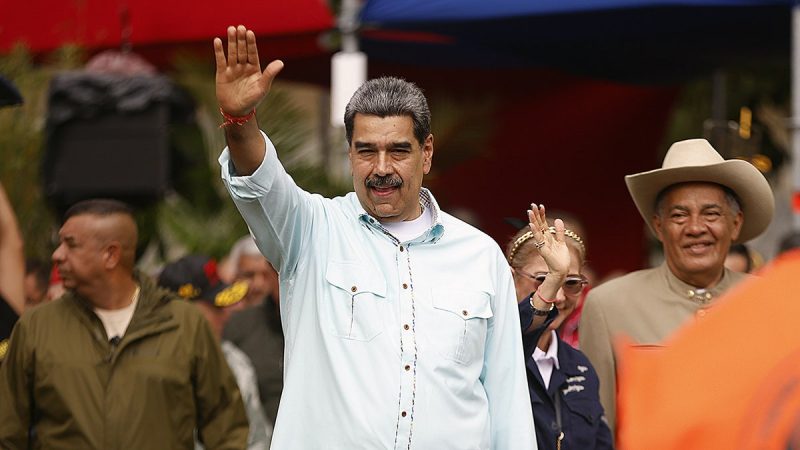

President Donald Trump’s announcement that the United States will temporarily ‘run’ Venezuela following the capture of Nicolás Maduro may prove to be a defining moment for the Western Hemisphere — either a disciplined effort to restore regional stability or the opening chapter of an avoidable, open-ended entanglement.
At his Mar-a-Lago press conference on Saturday, the president stated plainly, ‘We will run the country until such time as we can do a safe, proper and judicious transition.’ He added that members of his national security team standing behind him would oversee the effort and did not rule out ‘boots on the ground.’ Hours later, speaking aboard Air Force One, he sharpened the message further: ‘We’re going to run it, fix it.’
The strategic logic is easy to understand. Venezuela sits atop the world’s largest proven oil reserves and has become a hub for narcotics trafficking, corruption and malign outside influence. The administration’s December 2025 National Security Strategy explicitly embraces what it calls a ‘Trump Corollary’ to the Monroe Doctrine — pledging to deny non-hemispheric competitors such as China, Russia and Iran control over strategically vital assets in the Americas. In that framework, Venezuela is not merely a humanitarian tragedy; it is a test case.
But this is precisely where experience should sober ambition.
The first problem: Who is actually in charge?
A central contradiction now confronts Washington. How does the United States ‘run’ Venezuela when its constitutionally designated vice president, Delcy Rodríguez, has already been sworn in domestically as interim president following Maduro’s removal?
Rodríguez’s claim to authority — backed by Venezuela’s Supreme Tribunal of Justice and regime-loyal institutions — is rejected by Washington as illegitimate. Yet in practical terms, ministries, security forces and regional authorities inside Venezuela remain staffed by officials loyal to the old system. That means the United States is not governing Venezuela in name, law or day-to-day administration — even as presidential rhetoric suggests otherwise.
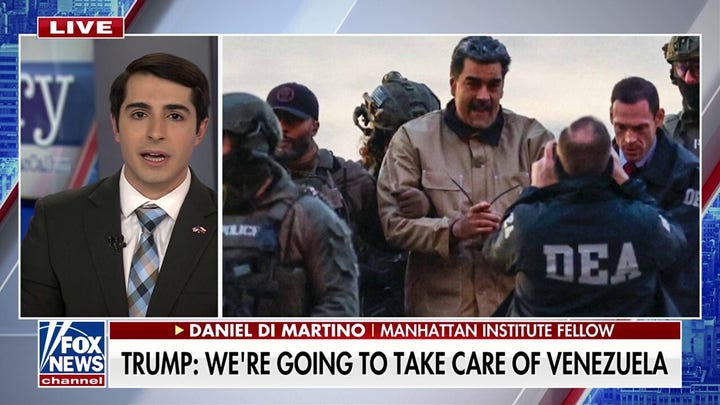
This disconnect between declared authority and actual control is where post-conflict operations often fail.
Lessons written in blood: Iraq and the cost of improvisation
I learned that lesson firsthand. In 2002 and 2003, I served as a member of then–Defense Secretary Donald Rumsfeld’s Military Analyst Group. We were given extensive access — briefings, travel and candid discussions with officials planning both the Iraq invasion and what would follow.
In early 2003, several of us met with retired officers outlining postwar governance plans. We asked basic but essential questions: Who would secure ministries? How would local governance function? How would electricity, water and fuel distribution be restored? The answers were often vague, more aspirational than operational.
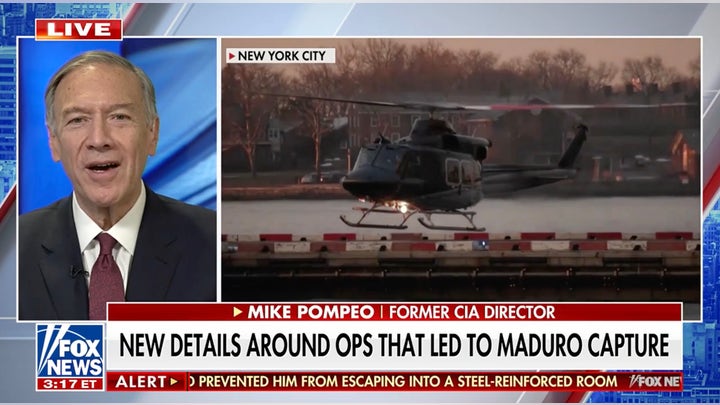
After the invasion, I visited Baghdad and met with Coalition Provisional Authority officials under Ambassador Paul Bremer. Again, the gaps were obvious. We had removed a regime but had not built the machinery needed to prevent the vacuum that follows.
One decision still echoes: the CPA’s order dissolving Iraq’s security institutions, including the Ministry of Defense. RAND’s official history records that the order was issued with little objection at senior levels, even as misunderstandings were masked by apparent consensus. The result was predictable — security collapsed, insurgency surged and the U.S. presence expanded far beyond its original scope.
Venezuela now risks a similar mistake. Capturing Maduro may prove to be the easy part. Governing what comes next is the hard part — and the part America has too often improvised.
Panama is the wrong analogy
Some have compared Venezuela today to Panama in 1989, when U.S. forces captured Manuel Noriega and quickly installed Guillermo Endara as president. The comparison is tempting — and deeply misleading.
Panama was small, U.S. forces were already present, and a recognized successor government was ready to assume power. Venezuela, by contrast, has 30 million people, no broadly accepted transitional authority and entrenched military-criminal networks embedded throughout the state. What worked in Panama cannot simply be scaled up to Caracas.
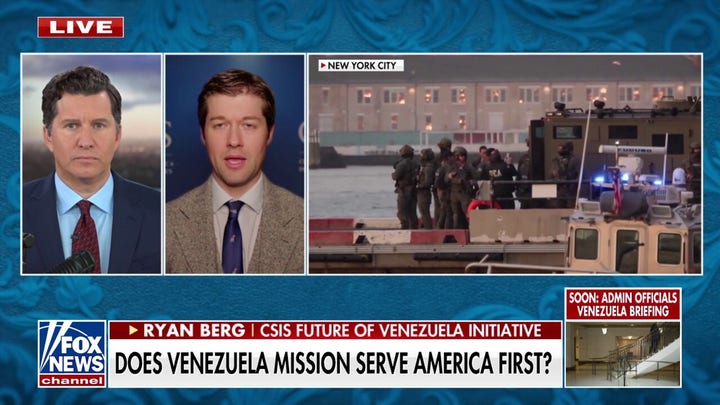
‘Not day-to-day governance’— what that really means
Secretary of State Marco Rubio has since clarified that the United States does not intend to govern Venezuela ‘day-to-day.’ That clarification matters — but it raises its own questions. If Washington is not running ministries, courts, budgets or police forces, what does that leadership look like?
In real terms, it appears the administration is signaling a model of indirect control rather than occupation. The primary lever is economic, especially oil.
Venezuela’s political and military elites survive on access to oil revenues. Whoever controls export permissions, sanctions relief, insurance access and dollar-denominated transactions controls the real center of gravity. Conditioning access to those revenues — while freezing assets abroad and coordinating sanctions enforcement with allies — offers Washington leverage over the top of the system without governing the country outright.
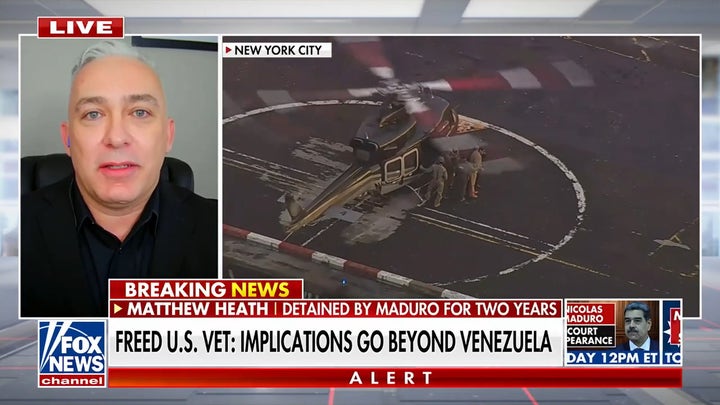
That approach amounts to influence without occupation: pressure without American administrators running Caracas.
A narco-state is not a one-man show
There is also a dangerous illusion at work — that removing Maduro dismantles the regime.
Maduro sat at the apex of a narco-state and was indicted in U.S. courts on charges of drug trafficking and narco-terrorism. But he did not act alone. His power rested on a network of generals, intelligence chiefs, judges, energy officials and cartel intermediaries who enriched themselves under the existing system. Many of those figures remain in place today.
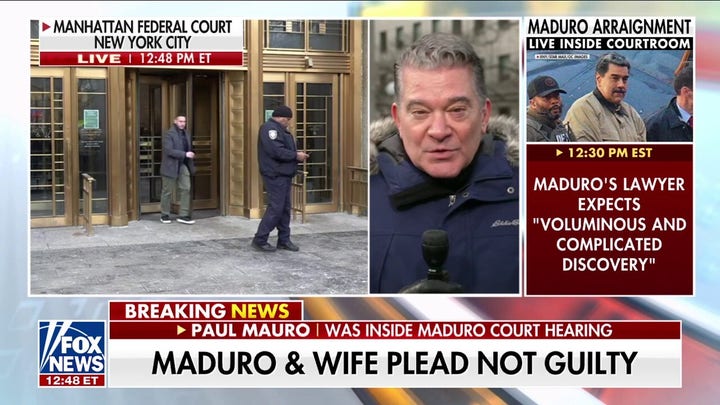
They are unlikely to surrender quietly. Some will seek accommodation; others will resist through bureaucratic sabotage, violence or the manipulation of public fear. Without a credible transitional framework anchored in Venezuelan civil society and supported by international legitimacy, the system Maduro built may survive him.
The questions that must be answered — now
If the administration wants to avoid repeating Iraq, it must answer several questions publicly and soon.
What is the legal basis — and limit — of U.S. authority? Who provides immediate security, and under what rules? Which Venezuelan partners will be empowered to lead? What economic plan serves Venezuelans first, not just foreign interests? And how does this mission end?
Once the United States assumes responsibility for ‘running’ another country, it inherits responsibility not only for success but for failure.
The Trump administration can still make Venezuela a model rather than a warning. But doing so will require discipline: clearly defined objectives, credible Venezuelan partners, continuity in security forces, transparent reconstruction tied to humanitarian relief and an exit strategy that is real — not rhetorical.
Venezuela is not Iraq. But history has a way of repeating itself when preparation yields to improvisation.